When you need to cool one room, the choice usually comes down to a window air conditioner or a portable unit on wheels. They look similar on a store shelf, and the boxes often advertise similar BTU numbers. But they are not equally efficient. A window unit keeps all the hot parts outside; a portable unit sits inside the room it is trying to cool and has to push its heat out through a hose. That difference shows up on your electric bill. This guide explains the ratings, compares monthly running costs at the EIA's August 2026 average residential price of 18.16¢ per kWh, and covers when a portable unit is still the right choice.
How each type works
Window units
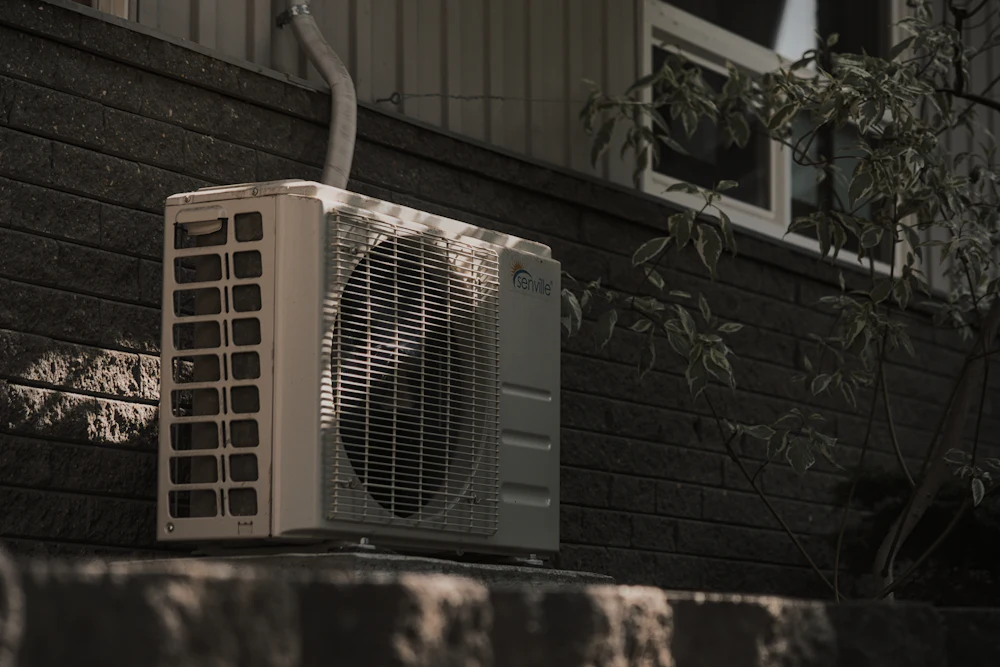
A window air conditioner is split by a wall inside its own case. The evaporator coil and fan face the room; the compressor, condenser coil and outdoor fan hang outside the window. Heat removed from the room is released directly outdoors, and the outside air used to cool the condenser never enters the house. Newer U-shaped or saddle designs straddle the sill so the window can close between the two halves, which reduces noise and air leaks.
Portable units
A portable air conditioner puts every component, including the hot condenser and compressor, inside the room. It needs outdoor air to cool its condenser and an exhaust hose to send the heat out a window kit.
- Single-hose models draw room air across the condenser and blow it outside. That creates negative pressure, so warm outdoor air leaks back into the house through doors, windows and gaps to replace it, partly undoing the cooling.
- Dual-hose models pull outdoor air in through one hose to cool the condenser and exhaust it through the other, avoiding most of that infiltration.
In both cases the hose itself gets hot and radiates some heat back into the room, and the compressor's own heat adds to the load.
Reading the ratings: BTU, SACC and CEER
Window units are rated by cooling capacity in BTU per hour and by CEER (Combined Energy Efficiency Ratio), which is BTU of cooling per watt-hour, including standby power. Higher is better. ENERGY STAR window units typically reach CEER 12 or more, and inverter models 15 or higher.
Portable units used to advertise a capacity measured under the ASHRAE test, which ignored infiltration and hose heat and made portables look much bigger than they performed. Since a federal test procedure took effect, portables must also show a Seasonally Adjusted Cooling Capacity (SACC), which accounts for those losses. A unit advertised at 14,000 BTU under the old method might have a SACC of only 8,000 to 10,000 BTU. Always compare portables by SACC, and compare their CEER, which is calculated on SACC, with a window unit's CEER.
| Rating | Window unit | Portable unit |
|---|---|---|
| Capacity to compare | BTU/h on the EnergyGuide label | SACC, not the larger "ASHRAE" BTU |
| Typical efficiency (CEER) | 11–12 standard, 15+ inverter | About 7–10 single-hose, 9–11 dual-hose |
| Infiltration penalty | None beyond panel gaps | Significant for single-hose |
| Noise in the room | Compressor outside | Compressor inside |
Monthly running cost compared
Each row gives the same effective cooling, measured as BTU per hour (SACC for portables), running 8 hours a day for 30 days with the compressor on the whole time. Power is capacity ÷ CEER.
| Unit | Watts | kWh/month | 12¢ | U.S. average (18.2¢) | 30¢ |
|---|---|---|---|---|---|
| Window, 8,000 BTU, CEER 11 (standard) | 727 | 175 | $20.95 | $31.70 | $52.36 |
| Window, 8,000 BTU, CEER 15 (inverter) | 533 | 128 | $15.36 | $23.24 | $38.40 |
| Portable dual-hose, 8,000 BTU SACC, CEER 10 | 800 | 192 | $23.04 | $34.87 | $57.60 |
| Portable single-hose, 8,000 BTU SACC, CEER 8 | 1,000 | 240 | $28.80 | $43.58 | $72.00 |
| Window, 12,000 BTU, CEER 12 | 1,000 | 240 | $28.80 | $43.58 | $72.00 |
| Portable single-hose, 12,000 BTU SACC, CEER 8.5 | 1,412 | 339 | $40.66 | $61.53 | $101.65 |
Worked example
- An 8,000 BTU window unit with CEER 11 draws 8,000 ÷ 11 = 727 W.
- A single-hose portable with an 8,000 BTU SACC and CEER 8 draws 8,000 ÷ 8 = 1,000 W for the same cooling.
- Over 240 hours a month: 727 W uses 175 kWh; 1,000 W uses 240 kWh.
- The difference, 65 kWh a month, costs $11.80 at today's U.S. average price. Over a four-month cooling season, that is about $47.22; at 30¢, $78.00.
And the comparison flatters the portable, because its single-hose infiltration often makes the rest of the house warmer too, adding load to any central system that is also running. Compared with an inverter window unit (CEER 15, 533 W), a single-hose portable uses nearly twice as much electricity for the same cooling.
When a portable unit still makes sense
- Your windows do not allow a window unit: casement or sliding windows, building rules, or historic-district restrictions. (Some window units are made for sliders; check before deciding.)
- You need to move cooling between rooms, such as a home office by day and a bedroom by night.
- You rent short term and cannot install anything in the window.
- Security or safety concerns about a unit in a ground-floor window.
If you choose a portable, buy a dual-hose model, compare by SACC, keep the hose as short and straight as possible, seal the window kit well, and consider insulating the exhaust hose.
Upfront price versus running cost
Portable units often cost more to buy than window units of the same real cooling capacity, and they cost more to run. A typical 8,000 BTU window unit sells for less than a portable with an 8,000 BTU SACC, and the window unit then saves around 60 kWh a month in the comparison above. Over five summers of four months each, that is roughly 1,200 kWh, about $217.92 at today's U.S. average price, on top of the lower purchase price. Inverter window units cost more upfront than standard ones, but at higher electricity prices their savings over a portable or a standard unit add up quickly.
Noise and comfort
Because the compressor of a portable unit sits in the room, portables are usually louder indoors than window units, especially U-shaped and inverter window designs that keep the compressor outside the closed window. For bedrooms, noise is often the deciding factor.
Ductless mini splits: the efficient third option
If you cool the same room every summer for years, a single-zone ductless mini split is worth pricing. It needs a professional installation and costs more upfront, but a 12,000 BTU mini split rated around 20 SEER2 averages about 600 W while cooling, half the power of a typical portable delivering the same cooling, and it heats efficiently in winter. See the mini-split calculator.
Tips for either type
- Size it to the room. ENERGY STAR suggests roughly 5,000 BTU for 100 to 150 sq ft, 8,000 BTU for 300 to 350 sq ft and 12,000 BTU for 450 to 550 sq ft. Oversized units short-cycle and leave the room clammy.
- Seal gaps around side panels and window kits with foam weatherstrip.
- Clean the filter every two weeks in heavy use.
- Use the timer or app to start cooling shortly before you need the room, and use energy saver mode so the fan stops with the compressor.
- Set 78°F and add a fan; the fan lets you feel comfortable several degrees warmer.
- On a time-of-use plan, pre-cool the room before the peak and coast through the most expensive hours.
Calculate your own cost
Enter your unit's BTU and CEER in the window AC calculator (it works for portables too: use the SACC and the portable's CEER), set your hours and choose your state. For whole-house comparisons, see the central air calculator.
Frequently asked questions
Why is a portable air conditioner less efficient than a window unit?
Because the hot parts are inside the room. The compressor and condenser add heat indoors, the exhaust hose radiates heat back, and single-hose models blow room air outside, pulling warm outdoor air in through gaps to replace it. Window units keep the condenser outside and avoid most of those losses.
What is SACC on a portable air conditioner?
Seasonally Adjusted Cooling Capacity is the cooling a portable unit actually delivers once infiltration and hose heat are accounted for, measured under the Department of Energy test procedure. It is usually much lower than the older ASHRAE BTU figure printed prominently on many boxes. Compare portables with each other, and with window units, using SACC.
Are dual-hose portable air conditioners better?
Yes. A dual-hose model uses outdoor air to cool its condenser and sends it back outside, so it does not depressurize the room and draw warm air in. It cools faster and uses less electricity for the same comfort than a single-hose unit of the same SACC, though it still trails a good window unit.
How much does it cost to run a portable AC all day?
A single-hose unit drawing about 1,000 W for 24 hours uses 24 kWh, roughly $4.36 at the U.S. average of 18.16¢. With the compressor cycling off part of the time once the room is cool, actual use is often 60 to 80% of that figure.