Skip to content
CostPerKWh

How much does it cost to run a heat pump?

Official EIA data · August 2026

W
h
days

A 3-ton heat pump typically draws about 2,000 to 4,000 W while heating, more in very cold weather. Backup resistance heat strips can add 5,000 to 15,000 W. Run time depends on the weather and the house.

EIA average residential price, August 2026. Your bill shows your exact rate.

Cost to run a heat pump per month

$130.75

720 kWh at 18.16¢/kWh (U.S. average)

Per hour of use
$0.54
Per day of use
$4.36
Per year (same use every month)
$1,569.02

Power draw

3,000 W

3 kW

Energy per year

8,640 kWh

if used like this all year

Use your utility's real rate. State averages hide big differences: look up what your own utility charges by ZIP code.

How a heat pump heats

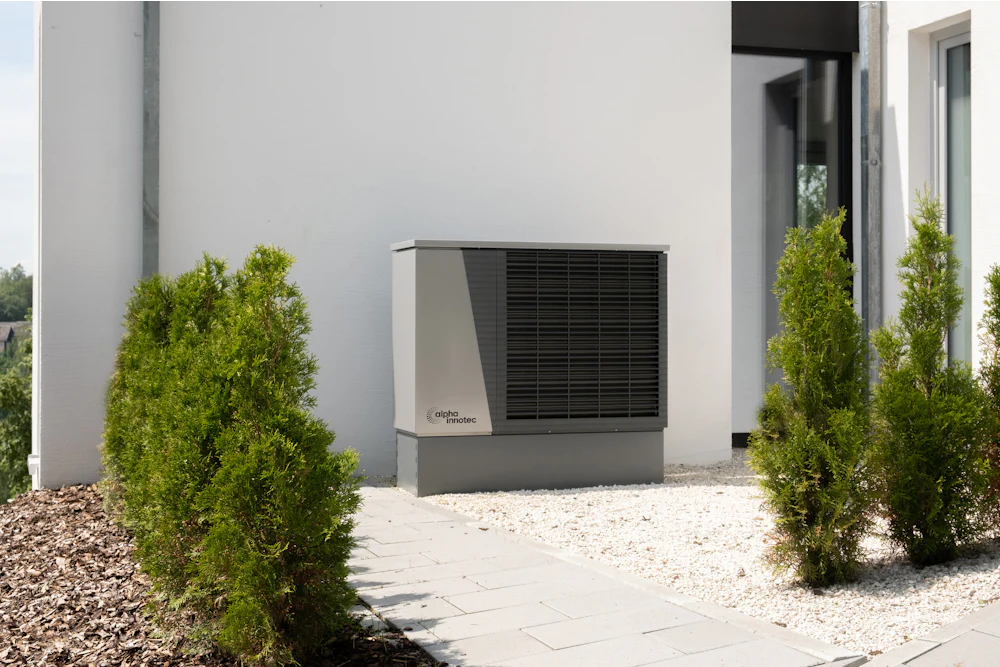
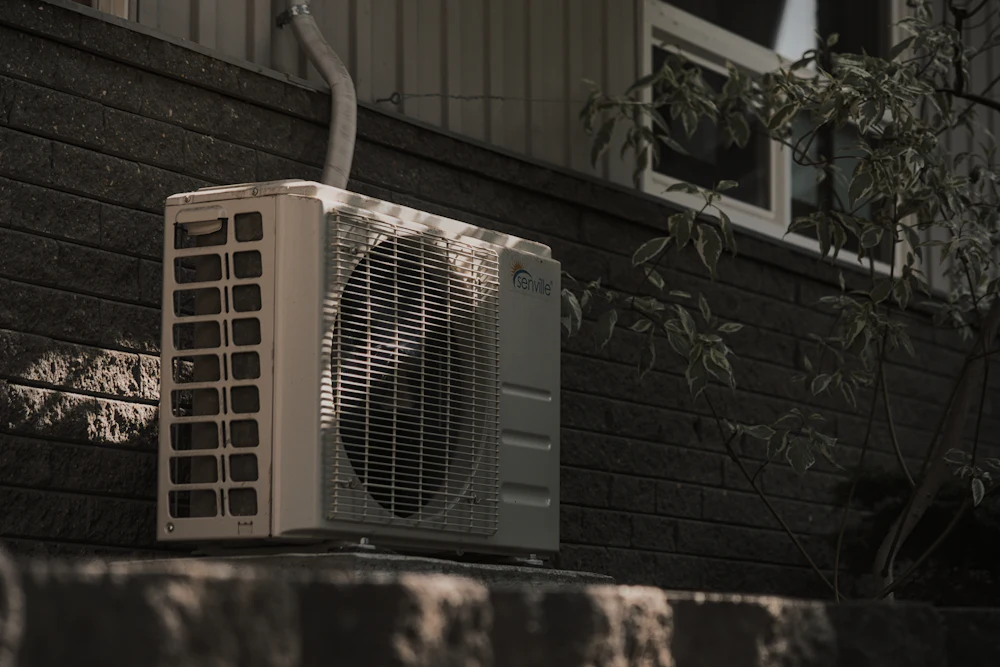
A heat pump is an air conditioner that can run in reverse. In winter, its outdoor coil absorbs heat from the outside air, even air well below freezing, and the compressor concentrates it and releases it indoors. Because it moves heat instead of creating it, a heat pump delivers more heat than the electricity it consumes. The ratio is called the coefficient of performance (COP): a COP of 3 means 3 kWh of heat for every 1 kWh of electricity.

COP depends on the outdoor temperature. A typical heat pump might reach a COP around 3 to 4 at 47°F, closer to 2 at 17°F and lower still in deep cold. Cold-climate models with variable-speed compressors keep producing useful heat well below 0°F. The seasonal rating on the label is HSPF2 (Heating Seasonal Performance Factor): the higher, the cheaper to run.

Most ducted heat pumps also have auxiliary or emergency heat: electric resistance strips in the air handler that help on the coldest days and during defrost cycles. They are reliable but expensive, with a COP of 1.

Heat pump cost at low, average and high rates

Today's U.S. average rate is 18.16¢.

UsagekWhLow rate (12¢)Average rate (16.5¢)High rate (30¢)
3-ton heat pump, 1 hour (3,000 W)3$0.36$0.50$0.90
Mild winter month, 6 h/day540$64.80$89.10$162.00
Typical winter month, 8 h/day720$86.40$118.80$216.00
Cold month, 12 h/day1,080$129.60$178.20$324.00
Backup heat strips, 10 kW, 1 hour10$1.20$1.65$3.00
Backup strips, 1 h/day for a month300$36.00$49.50$90.00

Worked example: heat pump versus baseboard heat

A house needs about 6 million BTU of heat in January, roughly 1,760 kWh of heat.

  1. Electric baseboard (COP 1): 1,760 kWh of electricity, about $319.62 at $0.1816 per kWh.
  2. Heat pump averaging a COP of 2.5 for the month: 1,760 ÷ 2.5 = 704 kWh, about $127.85.
  3. Same heat pump with backup strips supplying 15% of the heat during a cold snap: 1,496 ÷ 2.5 + 264 = 862 kWh, about $156.54.

Even with some strip heat, the heat pump costs about half as much as baseboard heat. Keeping strip heat to a minimum is what separates a reasonable heat pump bill from a painful one.

How to keep heat pump bills down

  • Avoid big setbacks. Steady temperatures let the compressor do the work without calling for strips.
  • Check the auxiliary heat lockout. An installer can set strips to run only below a certain outdoor temperature.
  • Watch the thermostat display: "AUX" or "EM HEAT" lit for long periods means expensive heat.
  • Change filters every one to three months; restricted airflow lowers efficiency.
  • Keep the outdoor unit clear of snow, ice and leaves, and let it defrost on its own.
  • Seal ducts and insulate the attic so the heat you pay for stays inside.
  • Look for utility rebates and federal incentives when upgrading to a cold-climate model.
Full details Costs in every state, real-world usage, formula and tips

Cost to run a heat pump for 10 minutes, an hour or a day

At 3,000 W and full power, at the U.S. average rate (18.16¢/kWh), the cheapest state and the most expensive one (August 2026).

Time onkWhU.S. averageNevadaHawaii
5 min0.254.5¢3.2¢12¢
10 min0.59.1¢6.4¢24¢
15 min0.7514¢9.5¢35¢
30 min1.527¢19¢71¢
1 hour354¢38¢$1.42
2 hours6$1.0976¢$2.83
8 hours24$4.36$3.05$11.32
24 hours72$13.08$9.16$33.97

Cost to run a heat pump in every state

For 3,000 W for 8 hours a day, 30 days a month, at each state's average residential electricity rate (August 2026, EIA). Click a state for more detail.

StateRatePer hourPer monthPer year
Nevada 12.72¢ $0.38 $91.58 $1,099.01
Louisiana 12.87¢ $0.39 $92.66 $1,111.97
North Dakota 13.31¢ $0.40 $95.83 $1,149.98
Utah 13.31¢ $0.40 $95.83 $1,149.98
Idaho 13.37¢ $0.40 $96.26 $1,155.17
Tennessee 13.42¢ $0.40 $96.62 $1,159.49
Nebraska 13.54¢ $0.41 $97.49 $1,169.86
Kentucky 13.80¢ $0.41 $99.36 $1,192.32
Arkansas 14.37¢ $0.43 $103.46 $1,241.57
Mississippi 14.43¢ $0.43 $103.90 $1,246.75
Wyoming 14.43¢ $0.43 $103.90 $1,246.75
Washington 14.63¢ $0.44 $105.34 $1,264.03
Oklahoma 14.82¢ $0.44 $106.70 $1,280.45
North Carolina 14.95¢ $0.45 $107.64 $1,291.68
Florida 14.99¢ $0.45 $107.93 $1,295.14
Arizona 15.05¢ $0.45 $108.36 $1,300.32
South Dakota 15.15¢ $0.45 $109.08 $1,308.96
Kansas 15.47¢ $0.46 $111.38 $1,336.61
Montana 15.57¢ $0.47 $112.10 $1,345.25
South Carolina 15.76¢ $0.47 $113.47 $1,361.66
Georgia 15.90¢ $0.48 $114.48 $1,373.76
Texas 15.91¢ $0.48 $114.55 $1,374.62
Oregon 15.92¢ $0.48 $114.62 $1,375.49
Missouri 16.02¢ $0.48 $115.34 $1,384.13
West Virginia 16.31¢ $0.49 $117.43 $1,409.18
Alabama 16.33¢ $0.49 $117.58 $1,410.91
New Mexico 16.51¢ $0.50 $118.87 $1,426.46
Indiana 17.02¢ $0.51 $122.54 $1,470.53
Iowa 17.06¢ $0.51 $122.83 $1,473.98
Colorado 17.17¢ $0.52 $123.62 $1,483.49
Minnesota 17.20¢ $0.52 $123.84 $1,486.08
Virginia 17.64¢ $0.53 $127.01 $1,524.10
Delaware 18.70¢ $0.56 $134.64 $1,615.68
Illinois 19.32¢ $0.58 $139.10 $1,669.25
Ohio 19.38¢ $0.58 $139.54 $1,674.43
Wisconsin 19.41¢ $0.58 $139.75 $1,677.02
Maryland 21.40¢ $0.64 $154.08 $1,848.96
Pennsylvania 21.77¢ $0.65 $156.74 $1,880.93
Michigan 22.99¢ $0.69 $165.53 $1,986.34
Vermont 23.84¢ $0.72 $171.65 $2,059.78
Connecticut 24.51¢ $0.74 $176.47 $2,117.66
New Jersey 24.61¢ $0.74 $177.19 $2,126.30
District of Columbia 25.98¢ $0.78 $187.06 $2,244.67
New Hampshire 27.64¢ $0.83 $199.01 $2,388.10
Rhode Island 28.18¢ $0.85 $202.90 $2,434.75
New York 28.65¢ $0.86 $206.28 $2,475.36
Alaska 29.41¢ $0.88 $211.75 $2,541.02
California 29.75¢ $0.89 $214.20 $2,570.40
Massachusetts 30.48¢ $0.91 $219.46 $2,633.47
Maine 32.11¢ $0.96 $231.19 $2,774.30
Hawaii 47.18¢ $1.42 $339.70 $4,076.35

How the cost is calculated

The Department of Energy's formula: watts × hours per day ÷ 1,000 = kWh per day. Multiply by the days you use it and by your rate in dollars per kWh. A 1,500 W device running 1 hour uses 1.5 kWh; at 18¢ that is 27¢.

How to lower the cost

  • Set it and leave it: deep setbacks can trigger expensive backup strip heat.
  • Change the filter regularly and keep the outdoor unit clear of snow and leaves.
  • Ask a technician to set the auxiliary heat lockout temperature.
Quick answers 4 common questions
How much does it cost to run a heat pump in winter?

A 3-ton heat pump drawing an average of 3,000 W for 8 hours a day uses 720 kWh a month, about $130.75 at the U.S. average of 18.16¢ per kWh (EIA, August 2026). In a cold month, with longer run times and some backup heat, the same system can use 1,000 to 1,500 kWh.

Is a heat pump cheaper than electric baseboard heat?

Yes, usually two to three times cheaper. Baseboard heat turns 1 kWh of electricity into 1 kWh of heat. A heat pump moves heat from outside air into the house and typically delivers 2 to 4 kWh of heat per kWh of electricity, depending on the outdoor temperature.

Why is my heat pump bill so high in cold weather?

Two reasons. Heat pumps lose efficiency as it gets colder, so they run longer for the same heat. And when they cannot keep up, or recover from a big thermostat setback, they switch on auxiliary resistance heat strips that can draw 5,000 to 15,000 W, as much as several space heaters at once.

Should I turn my heat pump down at night?

Only slightly, by 2 to 3°F at most, unless you have a smart thermostat designed for heat pumps. A large setback forces a long recovery in the morning, which is exactly when backup strips tend to switch on and erase the savings.

Sources

Last reviewed November 2, 2026. Rates refreshed automatically when EIA publishes a new month.

More calculators

See everything

Guides

These are estimates. State rates are EIA averages (total residential revenue ÷ kWh sold), so they include fixed monthly charges spread across usage; your own price per kWh, time-of-use rates and taxes can differ. Real appliance use depends on the model, settings, climate and habits.